How often should residential pest control be done?
Most Long Island homes benefit from quarterly pest control — four visits per year timed to seasonal pest activity. The right frequency depends on your home's history, pest pressure, and surroundings. Properties near wooded areas or water may need more frequent attention.
Is quarterly pest control worth it?
Yes. Quarterly service is significantly more cost-effective than emergency treatments after a full infestation. Regular visits allow technicians to catch early activity, treat entry points before pests get inside, and refresh exterior barriers seasonally. Most homeowners see fewer recurring problems within the first year.
What pests are most common on Long Island?
Long Island homeowners most commonly deal with ants (including carpenter ants), mice and rats, cockroaches, crickets, spiders, stink bugs, and seasonal invaders like cluster flies and yellow jackets. Termite activity is also a concern, particularly in older homes with moisture issues or wood-to-soil contact.
Is pest control safe for pets and children?
Yes — when applied by a licensed professional using products registered for residential use. Battle A Bug uses family-safe treatment methods and advises on any precautions needed before and after service, such as temporarily vacating treated areas or keeping pets away from treated surfaces until dry.
What should I do before a pest control treatment?
Clear counters and underneath sinks in kitchens and bathrooms. Move furniture away from baseboards if interior treatments are planned. Secure or remove pet food and water bowls, and cover fish tanks. Your technician will walk you through any specific preparation steps before the appointment.
Can pest control prevent infestations?
Yes. Preventative pest control is far more effective than reactive treatment. Regular exterior barrier applications, perimeter treatment at the routes pests travel, and moisture management significantly reduce the likelihood of indoor infestations. The goal is to stop pests before they establish themselves inside your home.
Why do ants keep coming back?
Ants return because the colony is still active after surface-level treatments. Store-bought sprays kill visible foragers but leave the nest — and the queen — untouched. Professional treatments use targeted baiting and barrier applications designed to reach the colony source and disrupt the reproductive cycle.
Do I need pest control in the winter?
Yes. Winter pest activity shifts rather than stops. Rodents actively seek warmth inside homes starting in fall and throughout winter. Overwintering insects like cluster flies and stink bugs can become a nuisance inside walls and attics. A winter visit addresses rodent entry points before activity escalates.
How long does pest control treatment last?
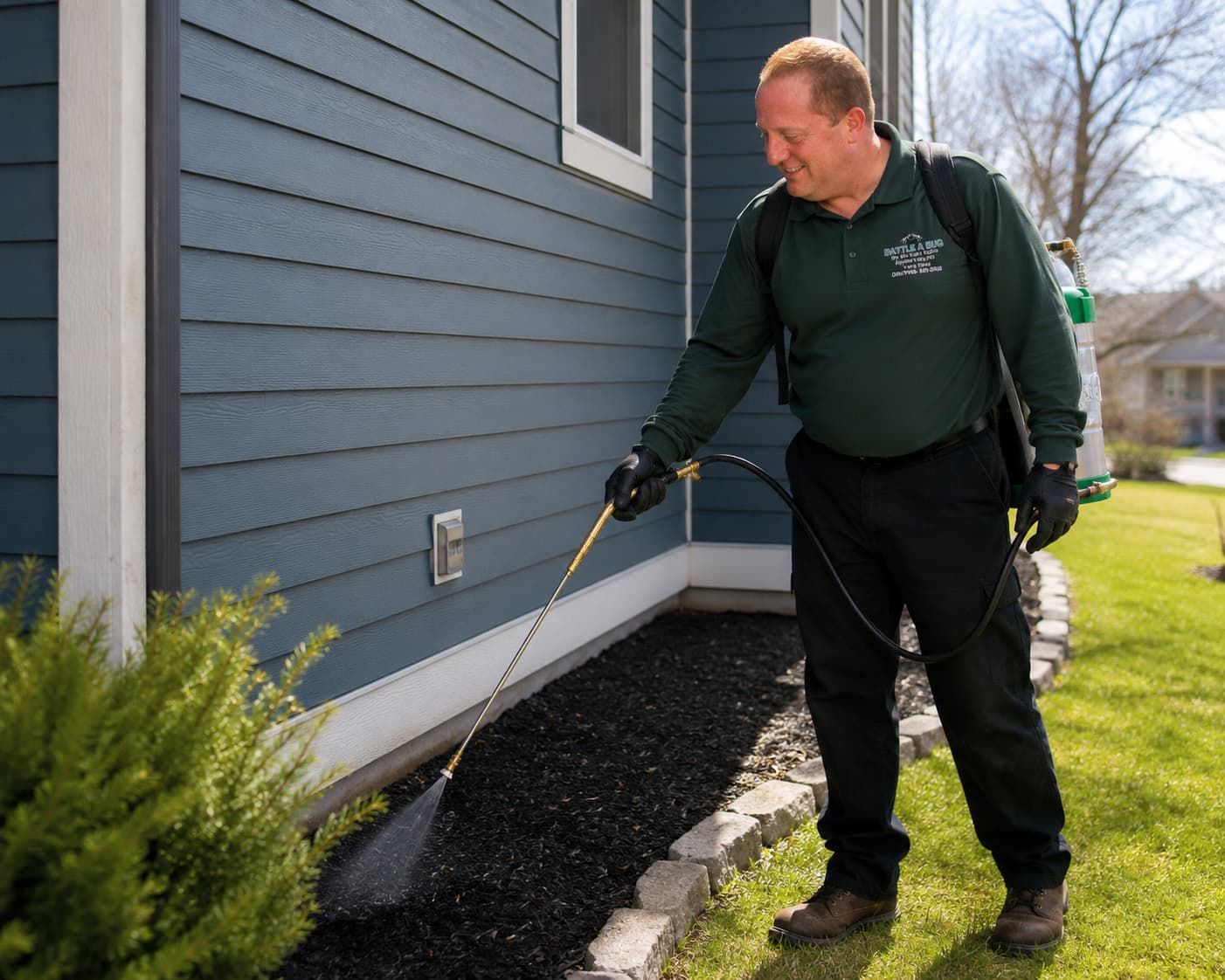
Exterior barrier treatments typically last 60–90 days depending on weather and rainfall. Interior treatments can remain effective longer when combined with ongoing prevention. This is why quarterly service provides the most consistent protection — each visit reinforces coverage before the previous application fully breaks down.
What's included in residential pest control services?
A standard residential service from Battle A Bug includes a full interior and exterior inspection, identification of active pests and conducive conditions, targeted treatment based on pest type, exterior barrier application, and a written report. Quarterly plans include all of the above on a seasonal schedule.
Does Battle A Bug provide residential pest control in both Nassau and Suffolk County?
Yes. Battle A Bug serves homeowners throughout Nassau County and the western portion of Suffolk County from our base in Massapequa Park. Nassau customers can call 516-798-2847 and Suffolk customers 631-425-2847. If you are not sure whether your town is in our service area, call either line and we will confirm right away.
How quickly can Battle A Bug respond to a pest problem at my home?
Same-day and next-day appointments are available for most residential services across Nassau County and Western Suffolk County, and emergency response is available when a situation requires immediate attention. Call 516-798-2847 (Nassau) or 631-425-2847 (Suffolk) to schedule.
Does Battle A Bug service condos and multi-unit buildings?
Yes. In addition to single-family homes, Battle A Bug provides residential pest control for condos, co-ops, and multi-unit residential buildings throughout Nassau County and Western Suffolk County. Treatment plans are tailored to shared walls, common areas, and building-wide pest pressure.
Is Battle A Bug licensed and insured to treat homes in New York?
Yes. Battle A Bug is a New York State DEC-licensed pest control business (NYSDEC Business Registration #10491), fully insured, and every residential treatment is performed by a certified pesticide applicator using products registered for residential use and applied according to label directions. Victor Bonavita is a past president of the New York Pest Management Association and the Long Island Pest Control Association.