What attracts ants into Long Island homes?
Ants are primarily attracted by moisture, food sources, and structural entry points. Older Long Island homes with wood-framed construction attract carpenter ants seeking damp, softened wood near rooflines, decks, or crawlspaces. Kitchens with unsealed food, exposed pet bowls, or fruit draw odorous house ants and pavement ants. Foundation cracks, gaps around utility penetrations, and overhanging vegetation serve as the main entry highways.
How do I know if I have carpenter ants?
Carpenter ants are the largest ant species in New York homes — up to 5/8 inch long, typically black or bicolored black and red. Key signs include piles of fine sawdust-like frass near walls or window frames, hollow-sounding structural wood when tapped, and rustling activity inside walls at night. Carpenter ants are most active after dark, which is when homeowners most often notice them in kitchens or crawling along baseboards.
Are carpenter ants dangerous to my home?
Carpenter ants don't eat wood the way termites do — they excavate it to build nesting galleries. Over time, especially in moisture-damaged structural wood, this weakens beams, floor joists, deck framing, and wall studs. A large established colony causes significant structural compromise, particularly in older Nassau County homes with wood construction and moisture issues in crawlspaces or attics. Early detection and treatment prevents costly repairs.
Why do ants keep coming back after I treat them myself?
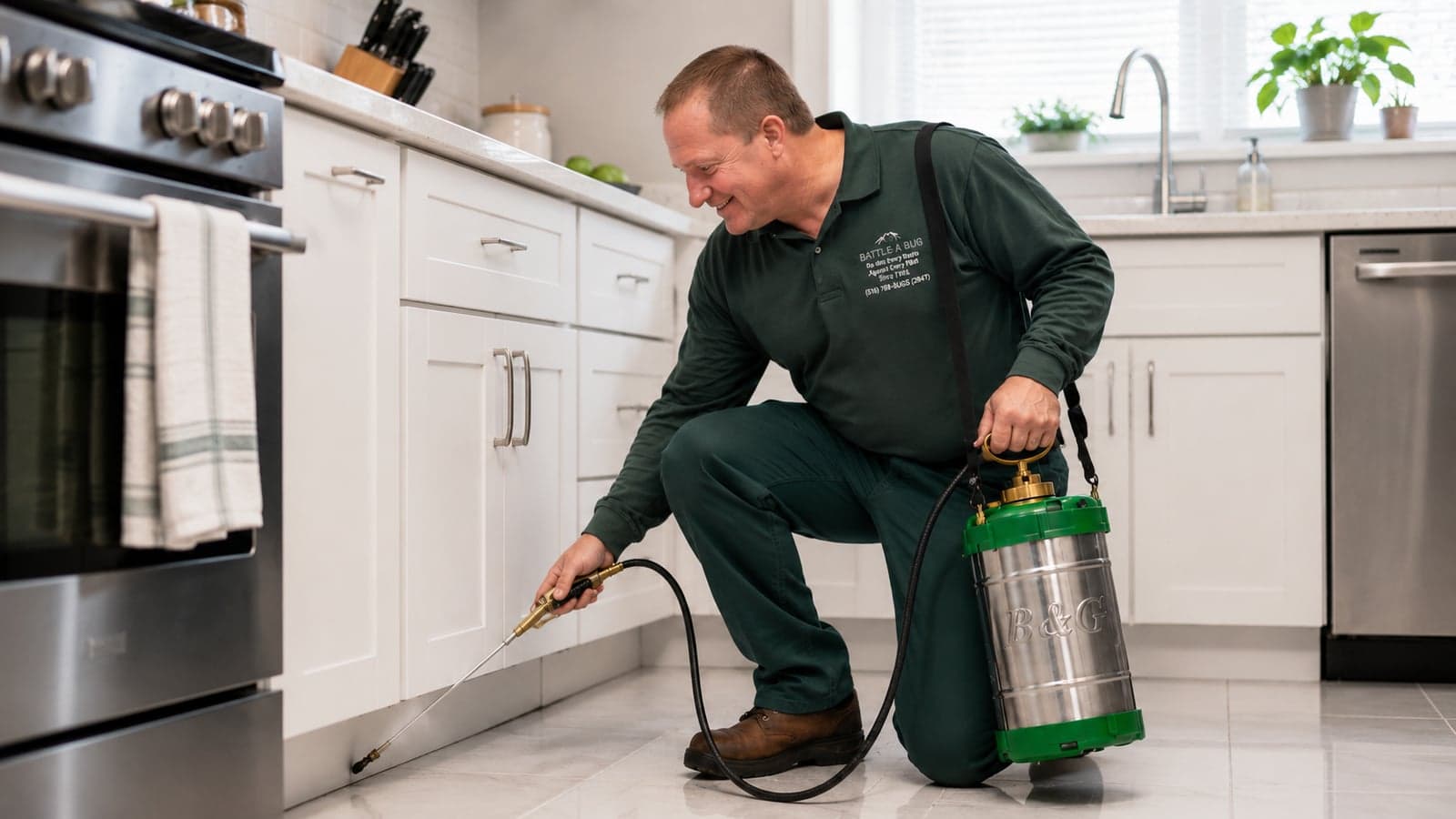
Consumer sprays are repellent-based — ants detect the chemical and reroute around it. You'll see fewer ants in the treated spot, but the colony is untouched and rebuilds quickly elsewhere. Professional treatment uses non-repellent insecticides: ants can't detect them, walk through the treated zone, and carry the active ingredient back to the colony on their bodies. It spreads through the population via worker-to-worker contact, reaching the queen and satellite nests a surface spray never could.
How long does professional ant treatment take?
An initial ant inspection and treatment typically takes 45–90 minutes for an average Long Island home. Carpenter ant jobs with multiple satellite nests may take 2 hours or more. Most homeowners see a significant reduction in ant activity within 24–72 hours. Full colony elimination typically takes 2–4 weeks as the non-repellent treatment transfers through the colony via worker-to-worker contact.
Is ant treatment safe for pets and children?
Yes. Battle A Bug uses EPA-registered non-repellent insecticides applied by NYS-licensed technicians. These professional-grade products are specifically chosen for their strong safety profile — in most cases, family and pets can remain home during treatment. We'll advise if any brief re-entry window is needed for specific exterior applications.
What time of year are ants most active on Long Island?
Carpenter ant activity peaks May through August when they're most visibly active and swarming. However, small ant species — odorous house ants and pavement ants in particular — push indoors any month of the year. Battle A Bug receives ant calls every month, including winter, because heated Long Island homes provide the warmth and food sources small ants need year-round. There's no "wait until spring" for an active interior ant problem.
Can ants actually damage my home?
Carpenter ants can cause meaningful structural damage over years, particularly when nesting in moisture-softened wood near rooflines, decks, window frames, and crawlspaces. Pavement ants and odorous house ants don't cause structural damage, but large indoor infestations contaminate food and are difficult to eliminate without professional-grade treatment. For any ant problem involving structural wood or one that has persisted more than a season, a professional inspection is recommended.
Do I need recurring ant control service?
Yes — and this is how we treat every residential home. After the initial clean-out, we put your home on a quarterly service plan. The professional-grade materials we use carry approximately 90-day residuals, so four visits per year maintains continuous protection with no gap for re-infestation. The goal is prevention — stopping the problem before it starts again rather than waiting for another active infestation. Ants, rodents, roaches, and crickets are all year-round on Long Island; quarterly maintenance keeps the pressure suppressed across the board.
Is Battle A Bug licensed and insured?
Yes. Battle A Bug is a New York State DEC-licensed pest control business (NYSDEC Business Registration #10491), holds Suffolk County Consumer Affairs HI# 45666-H, and is fully insured. Every ant control treatment is performed by a certified pesticide applicator, and we have been family-owned and operated on Long Island since 1996.